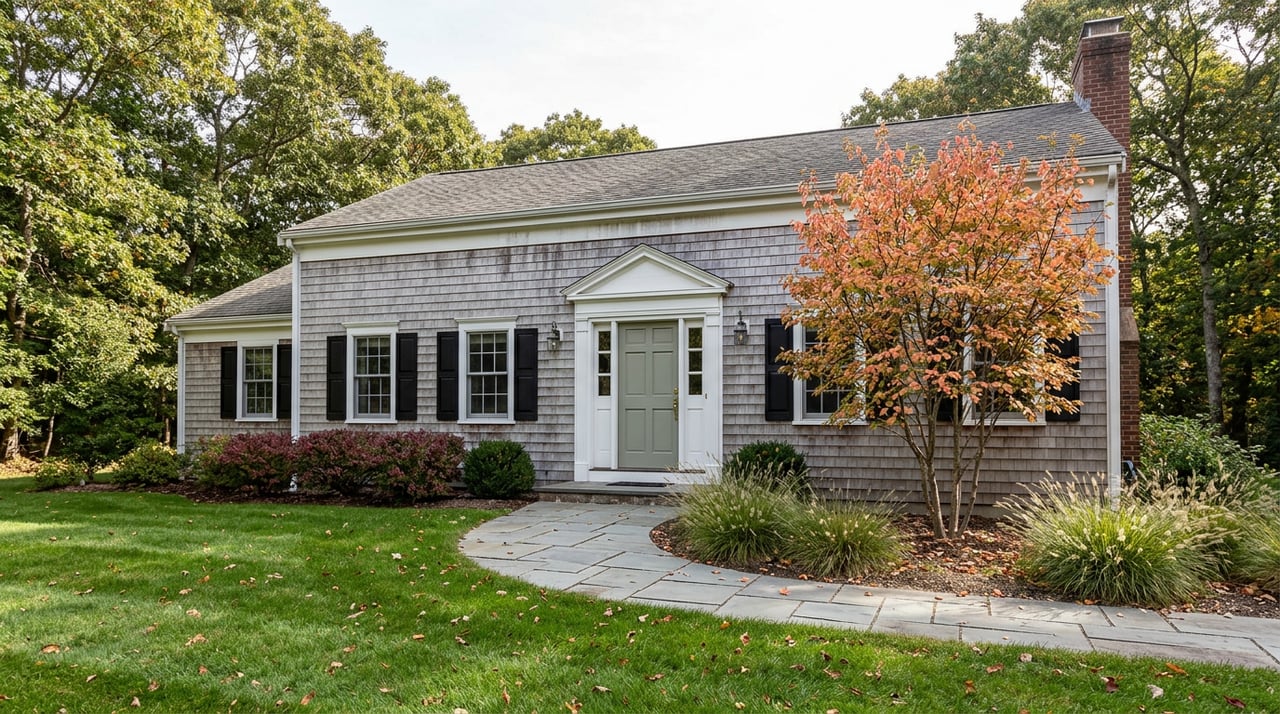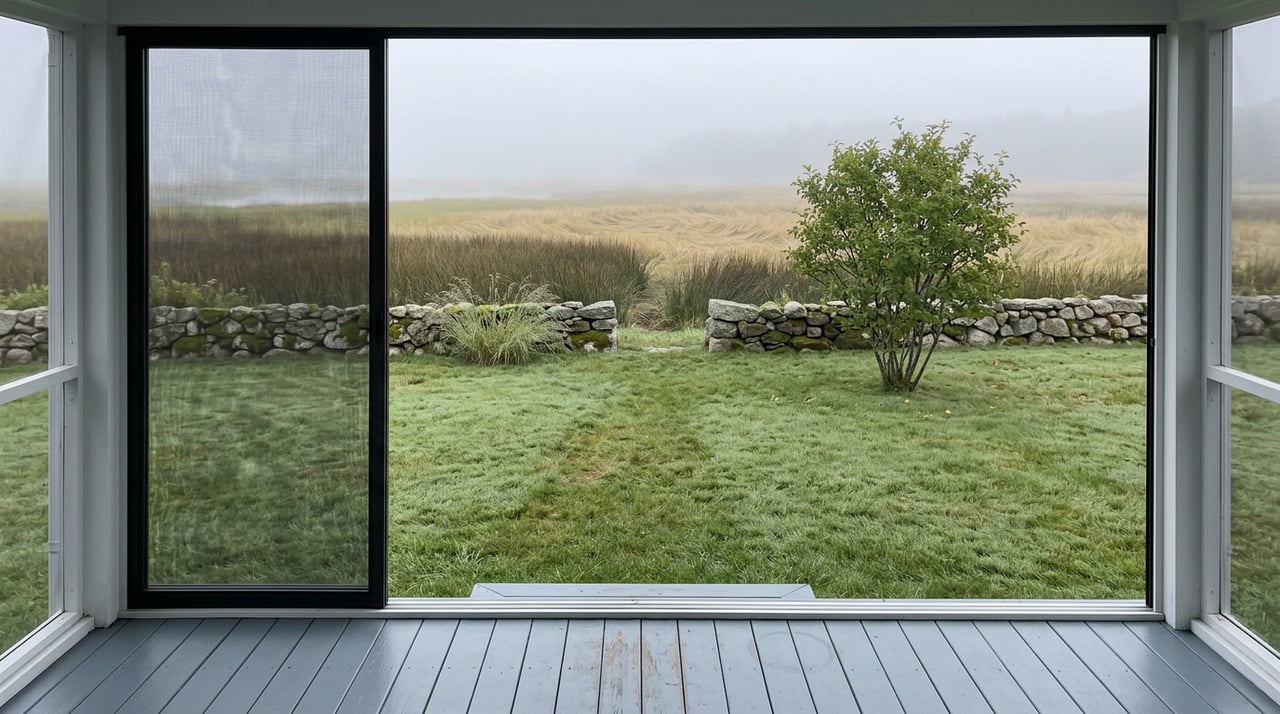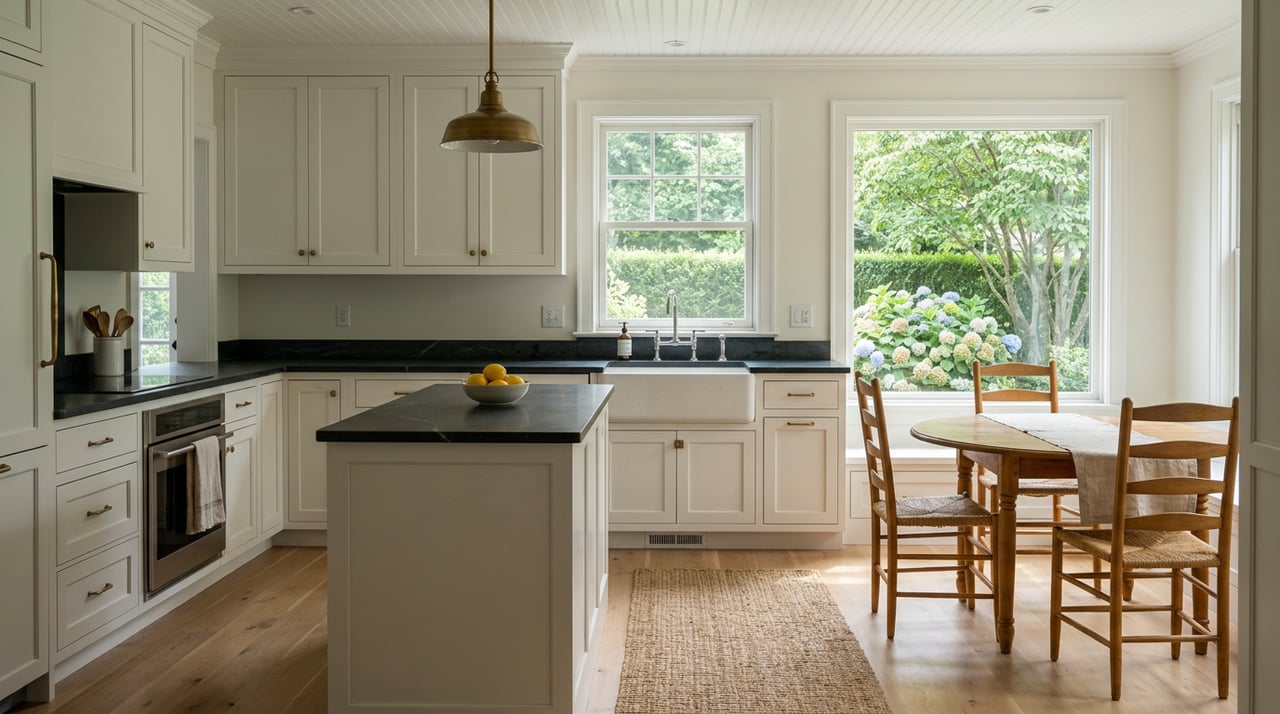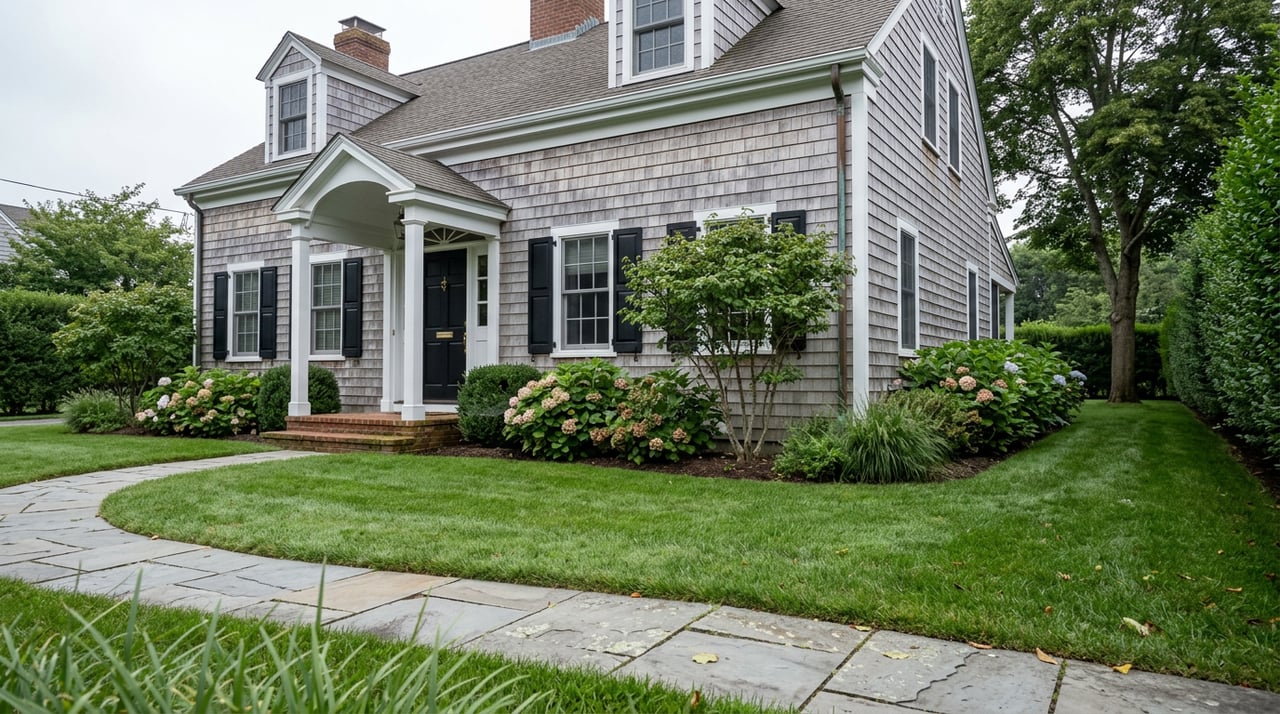
In early May 2026, a letter went out from Connecticut's State Historic Preservation Office to every property owner inside a proposed historic district that covers most of downtown Essex. It included a map of the boundary and an explanation of where the review stood. A lot of people who got it assumed the worst: a preservation commission was about to tell them what color they could paint their trim.
That assumption is mostly wrong, and the reason it's wrong tells you something useful about how Essex actually regulates what you can do to an old house here. The designation getting all the attention right now barely touches your renovation plans. The one that actually can is something almost nobody checks before they make an offer.
Three things people call "historic," and only one of them bites
Connecticut recognizes three kinds of historic designation, and the Essex Historical Society lays out the difference plainly on its own preservation page: National Register districts and State Register districts are largely honorific, built around recognition and tax incentives rather than restrictions on private property, while local historic districts are the ones regulated by municipal ordinance with real design controls on exterior changes.
Essex has exactly one completed designation on the books. The Village of Ivoryton was added to the National Register of Historic Places in 2014. Essex Village and possibly Centerbrook have been working toward that same National Register status since the town began the application process in 2021 with help from an outside consultant hired by the Planning Department. That application is currently sitting in what the Historical Society calls phase two of the acceptance process, under review by the State Historic Preservation Office. If it clears that stage, it goes to the National Park Service for final designation.
The proposed boundary, as drafted, runs from the corner of West Avenue and Grove Street up Prospect and North Main Streets, including New City Street, River View Cemetery, the lanes off North Main south of the cemetery, and the downtown peninsula around Champlin Square. That's the area the May letter went to.
Here's the part worth sitting with: nowhere in that process does a commission gain authority over your windows, your siding, or your paint color. The Historical Society's own answer to the question of how National Register inclusion affects homeowners is that it shouldn't affect them at all, because the designation is honorific. What it does unlock, for owners willing to go through State Historic Preservation Office review, is eligibility for state tax credit reimbursement on qualifying restoration costs.
| Designation | Administered by | What it controls | Status in Essex |
|---|---|---|---|
| National Register district | National Park Service, with SHPO review | Recognition and eligibility for state restoration tax credits. Does not restrict exterior changes. | Ivoryton, designated 2014. Essex Village and Centerbrook, pending since 2021, in SHPO phase two review as of the May 2026 letter. |
| State Register district | SHPO | Functions the same way as National Register, honorific with tax credit access | Not part of the current Essex application |
| Local historic district | Town-appointed preservation commission | Certificate of Appropriateness required before altering, erecting, or demolishing anything visible from a public street. Enforceable through the courts. | No active local historic district appears among Essex's current preservation resources. The town's public-facing preservation guidance is built entirely around the National Register process, not a local commission. |
That bottom row matters more than the top two combined. A local historic district is the version people picture when they hear "historic district," the kind where a commission can send you back to the drawing board over a porch railing. Connecticut law spells out exactly how binding that version is: once established, a local historic district commission must approve a certificate of appropriateness before a building can be altered, erected, or demolished, and its orders are enforceable by the Superior Court. Nothing in Essex's current preservation program rises to that level. There is no commission reviewing your renovation plans for appropriateness. There is no certificate you need before you touch the exterior.
So if the pending designation isn't the thing that can hold up your project, what is?
The approval that actually governs an old Essex lot
Essex runs almost entirely on on-site septic systems rather than municipal sewer, and that single fact does more to shape what you can build than any preservation designation currently in effect. The town's Health Department requires review and approval before installing, repairing, or modifying any part of a septic system, and the list of projects that count as a modification is longer than most buyers expect. Building conversions, changes in use, additions, garages and other accessory structures, swimming pools, decks, patios, and lot line changes all trigger that review, because each one has the potential to interfere with the system itself or with the reserve area set aside for a future repair.
That reserve area is the part people miss. On a tight in-town lot in Essex Village or Centerbrook, where houses were often built well before anyone thought about septic sizing, the space held in reserve for a future system repair can eat into exactly where a buyer imagined putting a garage or a pool. The Health Department review exists to catch that before you break ground, not after.
The town also keeps this enforceable in a way most buyers never think to check. Every septic pump-out gets logged in a public database called SepticSearch, searchable by town, street name, and street number, showing the date of service, the provider, and the type of work performed. The Health Department uses that record to confirm compliance with the town's Wastewater Management Ordinance. If you're evaluating an older Essex property, that log is a more useful pre-offer read than anything the historic district file will tell you, because it shows you how the actual infrastructure has been maintained, not just how old the house is.
What this looks like at different price points
Essex's for-sale inventory as of May 2026 spans a wide range, roughly $439,900 on the low end up to $7,889,000, with a median home price around $895,000 and homes spending an average of 91 days on the market before selling. That spread includes everything from smaller in-town cottages to Connecticut River waterfront estates, and it tells you the market isn't pricing in fear of the pending historic designation. A circa-1850 carriage house in the heart of Essex Village closed in June 2026 for $675,000, transacting like any other well-kept in-town property, with no preservation review slowing the sale.
What does change from property to property is the septic exposure. A cottage on a small in-town lot near Prospect Street carries more of that reserve-area risk than a newer build set on acreage outside the village core. That's a conversation worth having before you write an offer, not after the inspection contingency runs out.
A few direct questions
Will the pending National Register designation stop me from replacing my windows in Essex Village? No. The designation, if finalized, brings recognition and tax credit eligibility. It does not create a commission with authority over exterior changes.
Does my house need to be in the proposed district for the septic rules to apply? No. The Health Department's review requirements apply based on whether your property is served by an on-site septic system, which describes most of Essex, not on historic district boundaries.
What if I'm looking specifically in Ivoryton, since that designation is already final? Ivoryton's 2014 National Register listing works the same way the pending one is expected to: it's honorific. It doesn't add a design review layer on top of what already applies townwide.
What should I actually check before making an offer on an older in-town Essex home? Pull the SepticSearch pump-out history for the address and ask directly whether the lot has a documented reserve area, since that's what will determine whether your renovation plans are realistic.
If you're weighing a purchase or a sale of an older home in Essex Village, Centerbrook, or Ivoryton, and want to talk through what the septic footprint and the pending designation actually mean for your specific address, Dylan Walter is a phone call away. Let's Connect.